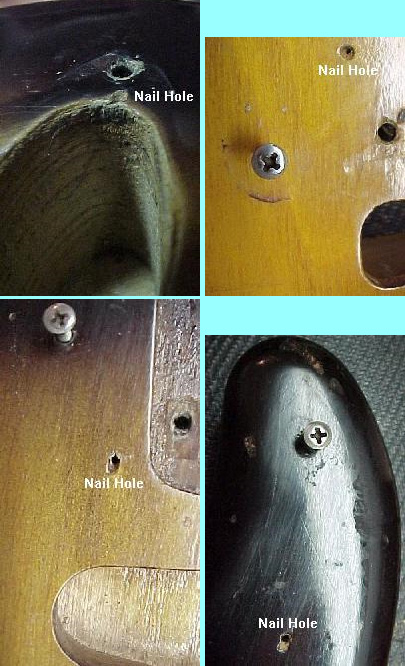
До 62 использовались гвозди, которые просто вбивались в деку и, опираясь на них, она сохла
потом трубы приспособили
The neck pocket on a 1963 Jazzmaster.
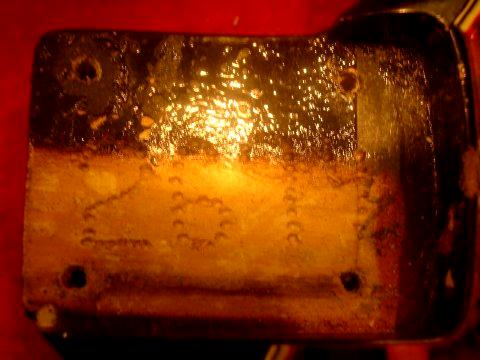
- то же самое, краски нету на половине кармана
Because the "lazy susan" paint method was used till the end of 1962, the neck pocket should be fully painted (because the nail legs where utilized during painting). Starting at the end of 1962,
the neck pocket should have an area on the bass side void of any paint (but still stained yellow before painting) where the "stick" was attached during painting.
It is very important to note that the nails were still used on Fender bodies, even after the implementation of the "stick". But the nail's sole job now was to provide a way to set the body down to dry, without anything touching the paint. Fender maintained this technique of using the nails until the end of 1964. At this point Fender implemented a "drying tree" to hold bodies as they dried. This approximately six foot high device could hold about 40 bodies while they dried, while using very little physical space. With the implementation of the drying tree, there was no longer a need for nails. There is a picture of the drying tree in A.R. Duchossoir's The Fender Telecaster, page 57 (upper right corner) and in Tom Wheeler's Stratocaster Chronicles book.
Фендер тоже кустарщик еще тот был, как видите
... и добавил:iZEP, а они там итак свое клеймо ставят, чтоб отличить можно было


 Размещение рекламы
 Голосование